Dancer in the Dark

DramaCrime
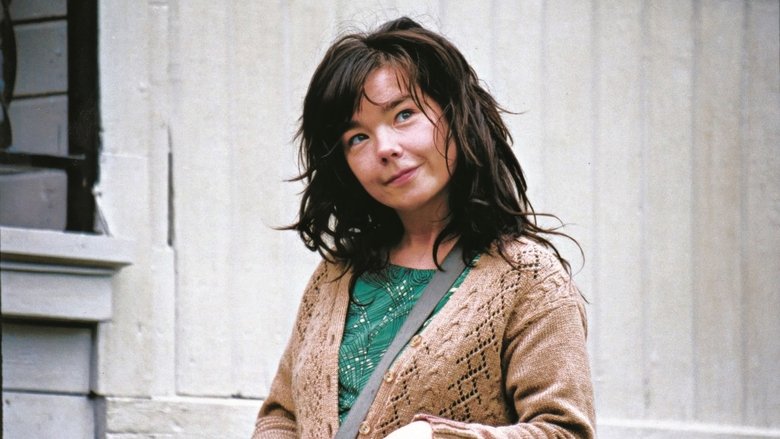
Overview : Selma, a Czech immigrant on the verge of blindness, struggles to make ends meet for herself and her son, who has inherited the same genetic disorder and will suffer the same fate without an expensive operation. When life gets too difficult, Selma learns to cope through her love of musicals, dreaming up little numbers to the rhythmic beats of her surroundings.
Budget : 12500000USD
language : en
Runtime : 140 min
Release Date : 2000-09-01
Imdb ID : tt0168629
Status : Released

Cast

Björk
Selma Jezkova

Catherine Deneuve
Kathy

David Morse
Bill Houston

Peter Stormare
Jeff

Joel Grey
Oldrich Novy

Cara Seymour
Linda Houston

Vladica Kostic
Gene Jezkova

Jean-Marc Barr
Norman

Vincent Paterson
Samuel

Siobhan Fallon Hogan
Brenda

Zeljko Ivanek
District Attorney

Udo Kier
Dr. Porkorny

Jens Albinus
Morty

Reathel Bean
Judge

Mette Berggreen
Receptionist

Lars Michael Dinesen
Defense Attorney / Dancer

Katrine Falkenberg
Suzan / Dancer

Michael Flessas
Angry Man

John Randolph Jones
Detective

Noah Lazarus
Officer of the Court / Dancer

Sheldon Litt
Visitor

Andrew Lucre
Clerk of Court / Dancer

John Martinus
Chairman / Dancer

Luke Reilly
New Defense Council

T.J. Rizzo
Boris / Dancer

Stellan Skarsgård
Doctor

Sean-Michael Smith
Person in Doorway

Paprika Steen
Woman on Night Shift

Eric Voge
Officer

Nick Wolf
Man with Hood

Timm Zimmermann
Guard / Dancer

Al Agami
Dancer

Alex Mouro
Dancer

Alexander Arli
Dancer

Allan Gyldenkærne
Dancer

Ami Eklöf-Annell
Dancer

Ana Christine Broström
Dancer

Anders Tärneberg
Dancer

Anders Thorhauge
Dancer

Anders-Peter Torsleff Hansen
Dancer

Ann Crosset
Dancer

Anna David
Dancer

Anna Norberg
Dancer

Anna Rosenberg
Dancer

Annette Lindholm
Dancer

Anthony Ajoise Olufemi Jacob
Dancer

Birgitte Skands
Dancer

Bjorn Ahlander
Dancer

Bo Westerholm
Dancer

Bobo Eriksson
Dancer

Britt Bendixen
Dancer

Carl Johan De Neergaard
Dancer

Carol Linda Nielsen
Dancer

Claus Berenhard
Dancer

Cristian Valle
Dancer

Diana G.L. Watson
Dancer

Ed Hickok
Dancer

Edvin Karsson
Dancer

Eli Stalhand
Dancer

Elin Johansson
Dancer

Emilie Bendz
Dancer

Erik Dammann
Dancer

Erik Drugge
Dancer

Fredrik Börgesson
Dancer

Frederik Mondrup
Dancer

Marianne Bengtsson
Dancer

Karoliina Heiskanen
Dancer

Troels Asmussen
Dancer (uncredited)

Caroline Sascha Cogez
Prison Guard - Serving Selma Jezkova's Last Meal (uncredited)

Available on

Similar Movies

Reviews

FrontrunnerParis
Dazzling Björk in this indictment against the death sentence, in tight close-ups. This film is a UFO, musical without being.
badelf
I have tremendous respect for Lars von Trier's work, and I deeply admire his courage in attempting to fuse drama with musical theater. "Dancer in the Dark" is nothing if not audacious. Unfortunately, ambition alone doesn't make a successful film, and this one fails both as a drama and as a musical. As drama, the film stumbles on two fundamental levels. First, the handheld, shaky camera movement is completely unnecessary. Von Trier broke other Dogme 95 rules throughout this film, so why cling to this one annoying restriction? The constant jittering ruins suspension of disbelief, pulling us out of the story when we should be immersed in Selma's tragedy. Second, and more damning, there's no redeeming value to the bleak outcome. What have we learned? This is Greek tragedy without the moral lesson—the protagonist dies, and we're left with nothing but emptiness. Catharsis requires meaning, and "Dancer in the Dark" offers none. As a musical, it fares no better. Musicals, even dark ones, require some happiness, continuity, or saving grace. The genre demands transcendence, a moment where song lifts us beyond suffering. Here, there is none. That said, Björk does a tremendous job with what she's given, and casting Joel Grey in the final courtroom musical number was absolutely brilliant, a meta-theatrical stroke that acknowledges the genre's history while subverting it. But brilliance in moments doesn't rescue a fundamentally flawed film. "Dancer in the Dark" is an admirable failure.
Geronimo1967
You get a clue as to the slightly surreal nature of the drama right from a start that sees Björk and Catherine Deneuve doing their own amateur dramatics rehearsals of “The Sound of Music”! It turns out that the former, “Selma”, is a Czech immigrant to the USA who is suffering from a progressive blindness that she has passed on to her young son. She knows that he still has time to have corrective surgery, but she has to earn the cash to pay for that so works at a tool assembly plant and saves every cent she can. She has a small group of friends, mainly just “Kathy” (Deneuve) and “Jeff” (Peter Stormare) who would like to develop their relationship despite her obvious, though always polite, reluctance. It might be that she could have achieved her goal but for a violent altercation with “Bill” (David Morse) that sees her facing a criminal trial. Now we know what happened, and I suspect we would all be shouting the best course of action from the auditorium, but will “Selma” listen to anyone? Why? Well she has a rather unique psychological recourse when the going gets tough. She imagines that the scenario is to feature in a piece of musical theatre - and, of course, we know that the joyous lyrics and perfectly choreographed dancing will always provide for an happy ending. What chance here, though? Aside from her singing prowess, Björk also presents us with a character that is simultaneously confident and vulnerable at the same time. “Selma” is shy yet outgoing, she has a determination to see her son gets his treatment at all costs, but still has time to dream of being “Maria” (as in Julie Andrews). Now I didn't love the jarring, hand-held, photography; there is a curious frostiness to the look of the film - despite the glowing efforts from the underused Deveuve and I can’t pretend that I fully grasped quite why the dispute with “Bill” followed the path it did, but I still found I cared for this young woman and about what happened to her as her declining sight seemed to become symbolic of something more, something quite sad. It does take it’s time, but there is some humour wrapped up in this frequently quite dark analysis of not just human spirit and resilience but of 1960s small town America. Perhaps singing “My Favourite Things” does work?